
Overview
Expanding career horizons for young Black male students, using AI to promote personalized exploration. With special emphasis on fields where Black males are traditionally underrepresented.
TimeLINE
Summer 2024
Team
Micheal Ho
Salena Burke
Yanshu Zhou
Yuhan Ke
Zachary Pino
Role
Design strategy
Product design
Interaction design
Tools
Figma
Adobe Suite
Ollama
Python
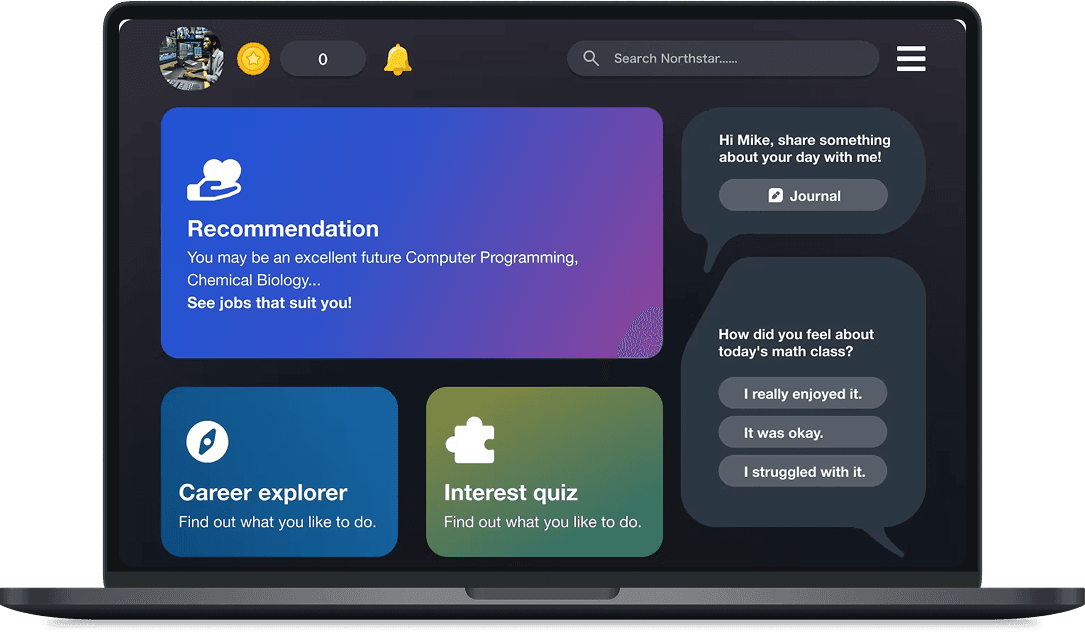
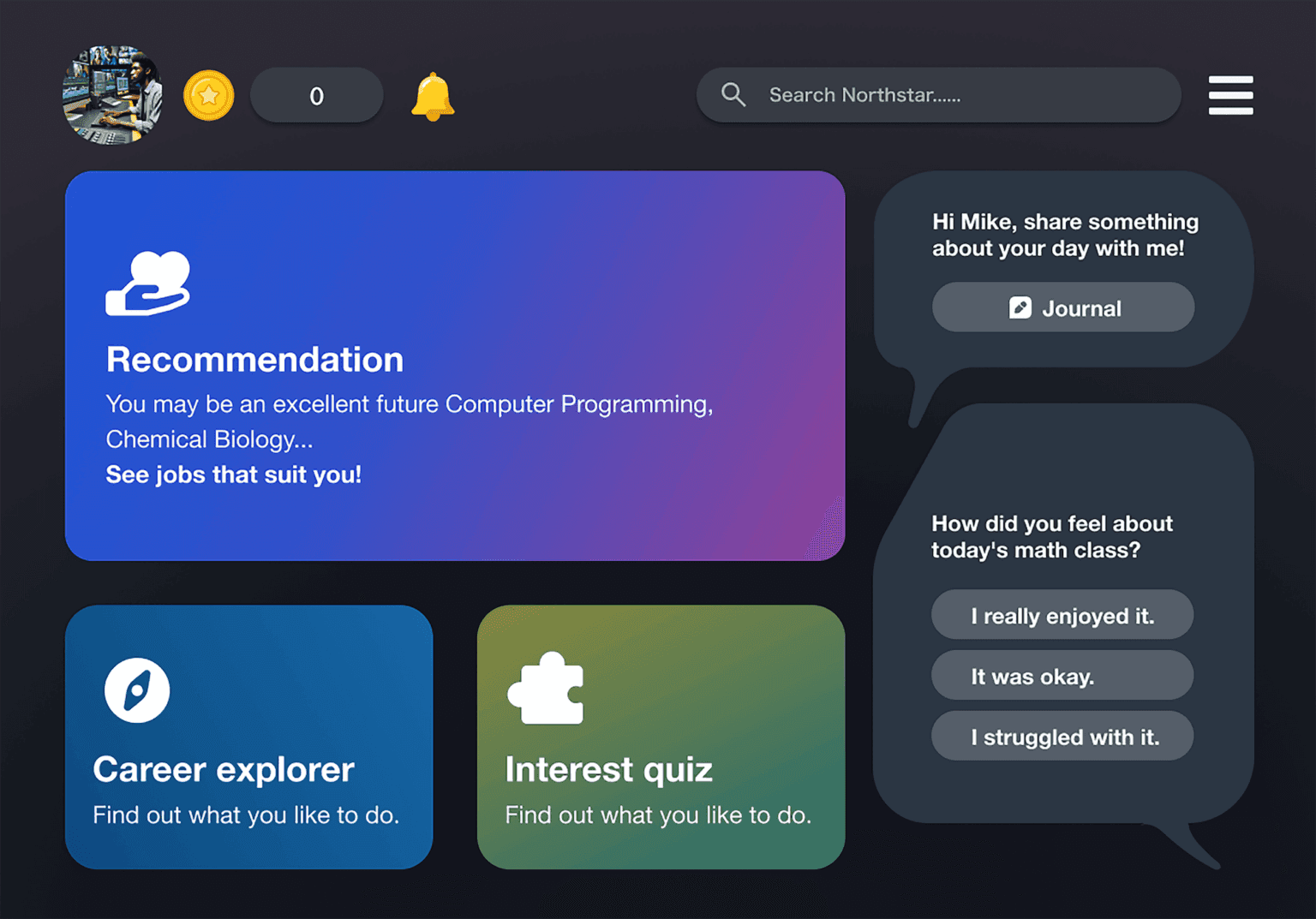
In America’s classrooms, limited emphasis on applied learning can make it challenging for many students, particularly young Black male students, to see how their education connects to real-world applications.
While traditional career counselling might point students toward familiar paths, a new design approach uses adaptive technology to help students envision futures they might never have considered.
the problem
African American boys are not failing the system — the system was never built for them.
Black workers ages 16–24 earn roughly 82 cents for every dollar earned by white peers, and this early disparity compounds into a lifetime of lower earnings.
This is not an ambition problem. It is an access problem.

Findings
Representation gap
African American boys are significantly underrepresented in career guidance resources that reflect lived experience.
One-Size Fits All
Existing platfoms lack the contexual intelligence and data integration, ignoring socioeconomic, cultural and geographical factors.
Immersive Learning Deficit
Traditional delivery fails to engage the demographic at the depth and techniques required for lasting behavioural change.
"From the outset, we recognized that simply matching interests to careers wouldn’t capture the depth and potential of the students we aimed to serve. We focused on addressing the barriers and biases that encumber young Black students, preventing them from envisioning themselves in diverse career paths."
Faysal Biobaku
Academic Data
Personalization
What does a student’s academic inclination tell us about their future career trajectory?
Student Interest
DOL Data
How much research backed data can we leverage on a broad scale, and what patterns emerge?
platform strategy
Layer 1
Student data
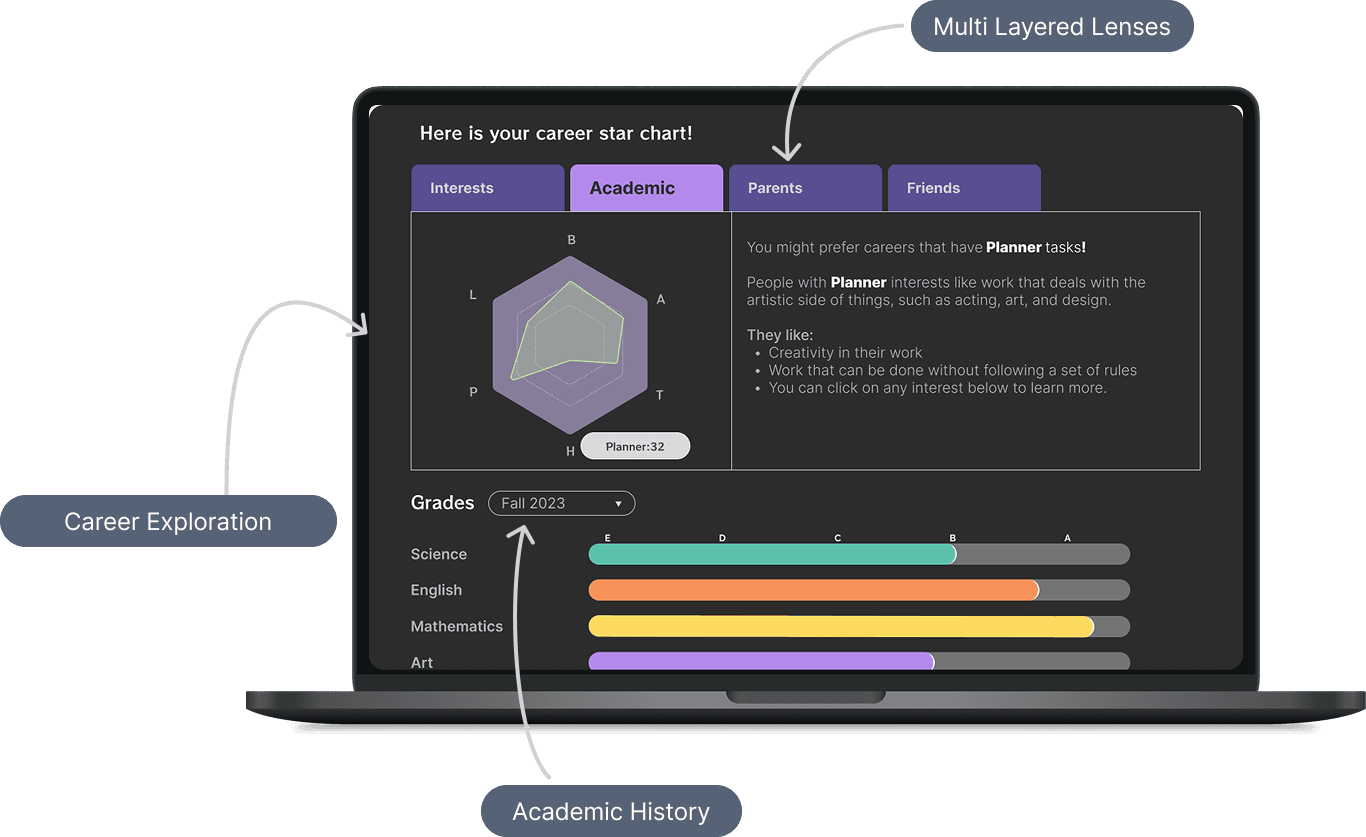
Academic history, parental observations, extracurricular signals and behavioural context — each weighted to build a holistic individual profile. `
Academic history
Personal Input
Contextual Weight
Layer 2
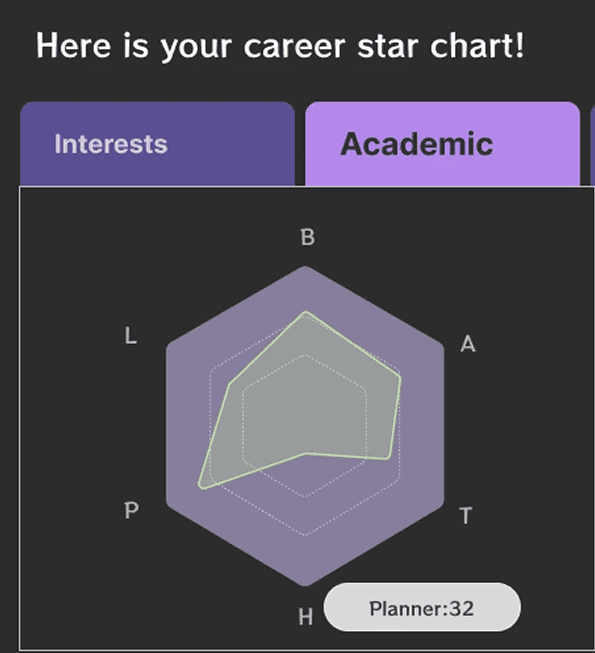
Holland code - (RAISEC)
All six personality dimensions were scored and weighted. A 3-letter code surfaces the student's dominant work personality — matching them to environments where they'll thrive.
Realistic
Social
Investigative
Enterprise
Artistic
Conventional
Layer 3
DOL career data O*NET
900+ occupations mapped across five dimensions from the U.S. Department of Labour's O*NET database, the most comprehensive occupational taxonomy available.
Abilities
Skills
Knowledge
Work styles
Interests
Job descriptions
Synthesis Engine`
LLM
All three layers weighted, cross-referenced and processed CIDR model drives the prompting logic.
OUTPUT
A weighted, visual roadmap unique to every student. Ranked career pathways, strength areas, and actionable next steps.


Representation as Infrastructure
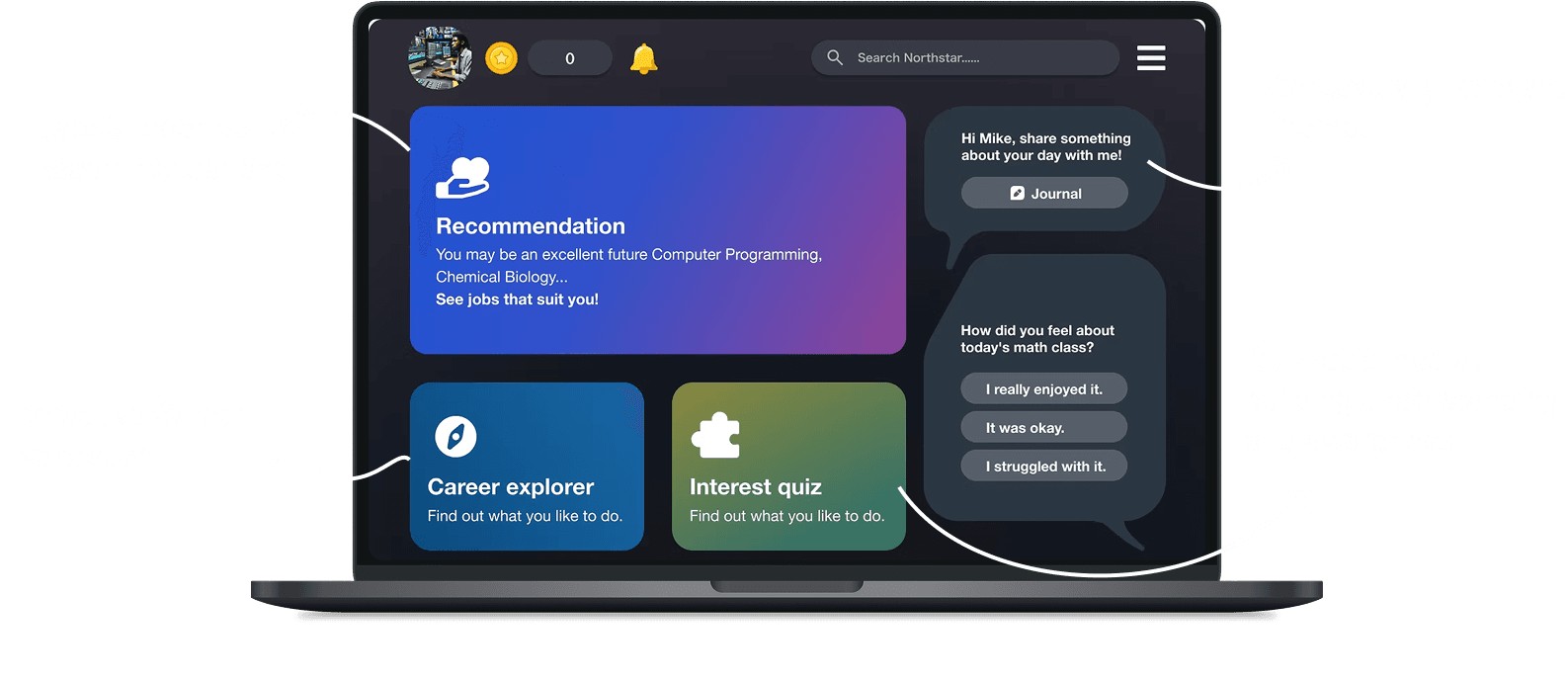
Students receive career suggestions based on their interests, academic strengths, and personal background.
The technology adapts its recommendations as students engage with different career options, learning from their choices and refining future suggestions.
From Data to Identity
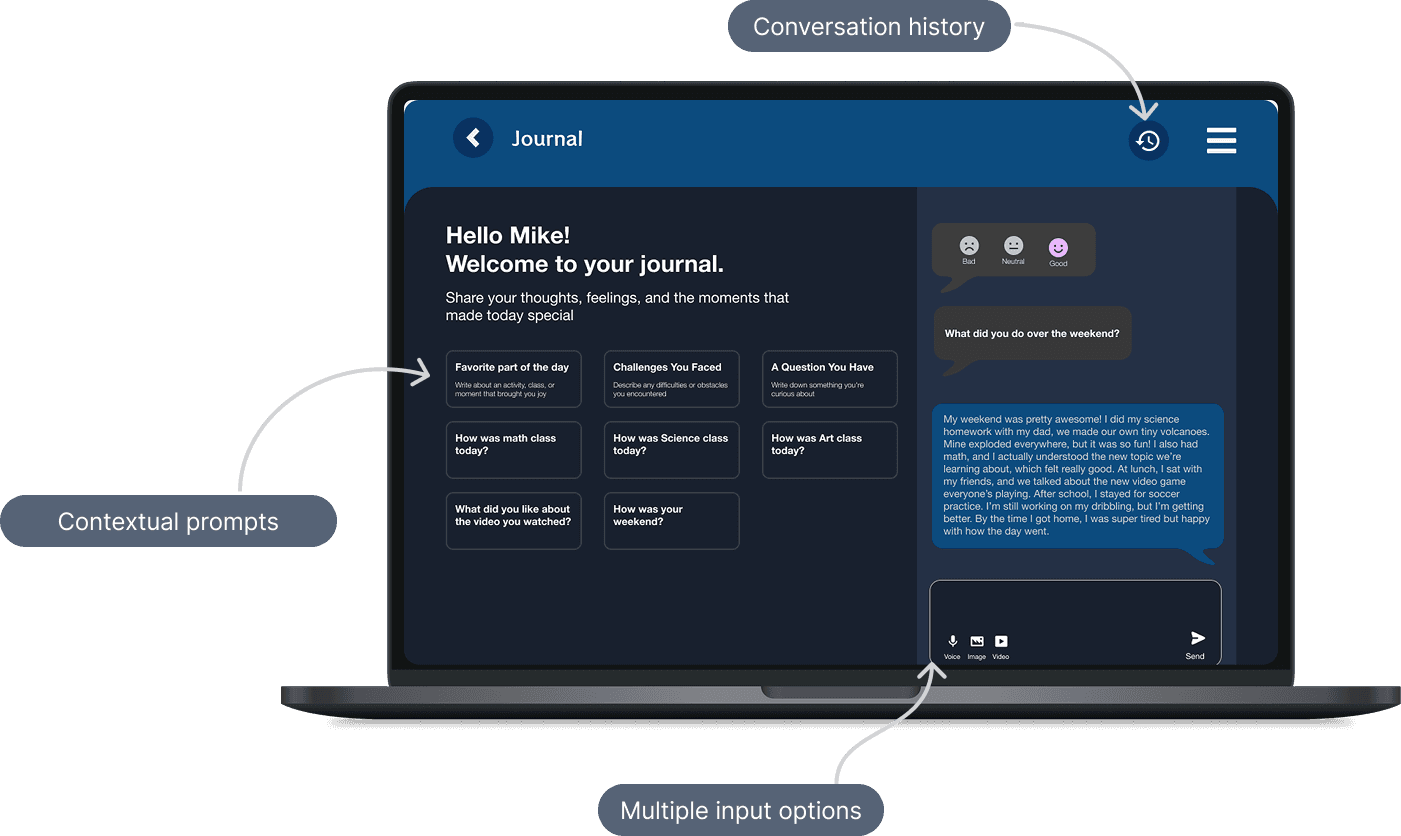
An integrated chatbot provides ongoing encouragement and guidance, engaging students in conversations about their interests, academic journey, and daily experiences. This feature creates a safe space for students to express concerns and receive support tailored to their specific situation.
Cultural relevance
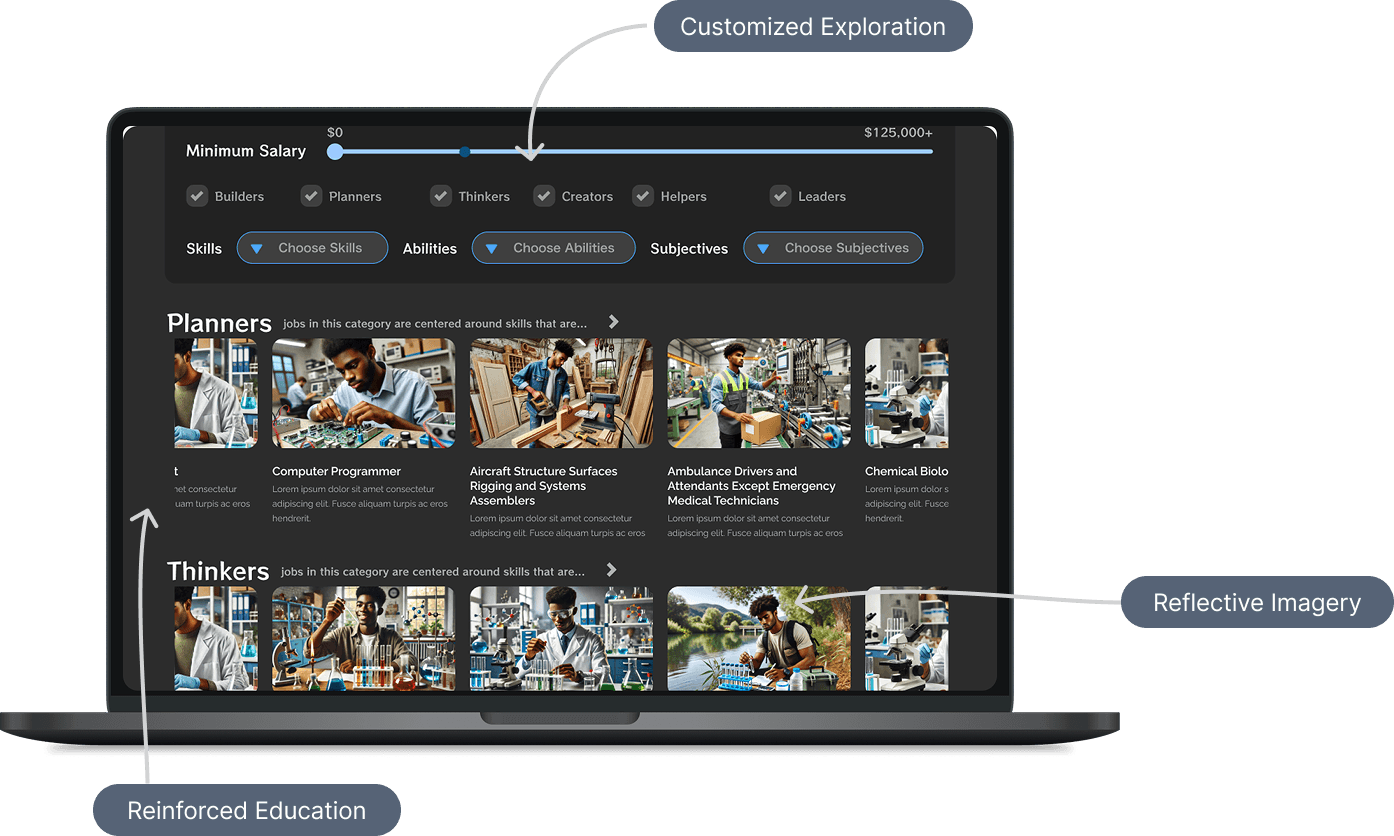
The platform features diverse role models across various fields, helping students see themselves represented in different careers through contextually relevant imagery.
A custom language model translates professional terminology into student-friendly language that resonates with young users.
Impact
The tool maps local opportunities for hands-on, accessible career exploration, from virtual options like documentaries and online workshops to in-person experiences when available in the student’s area.
Early results from simulated data show promising engagement. Simulations based on the platform indicate that students are likely to explore various career paths and discover careers they had not previously considered, with fields like biotechnology, renewable energy, and data science showing significant potential to spark interest. The ID team will continue its work with students at a charter school on the South Side of Chicago to validate these findings and further refine the platform.
© Faysal Biobaku 2026